

Every purchase tells a story.
Sometimes it is obvious: a luxury car bought to celebrate success, a designer fragrance worn for confidence, a pair of sneakers that makes someone feel culturally relevant.
Other times the story is disguised as practicality: a bank chosen for “better rates,” a software platform selected for “efficiency,” or an insurance policy purchased for “security.”
Yet beneath almost every buying decision lies a powerful psychological tension: the ongoing negotiation between emotion and logic.
The brands that dominate global markets understand this deeply. They know consumers rarely buy with logic alone, and almost never with emotion alone. Instead, elite marketing systems are designed to engage both simultaneously — capturing the heart first, then reassuring the mind.
That balance is where modern brand power lives.
The Myth of the “Rational Consumer”
Consumers often believe they make decisions logically.
In reality, most decisions begin emotionally and are later justified rationally.
A customer may say they bought a premium smartphone because of its camera quality and processing speed. Yet what truly influenced them may have been something harder to quantify: status, identity, simplicity, belonging, or aspiration.
The same principle applies across industries.
A luxury vehicle is rarely just transportation. A bank account is rarely just financial infrastructure. A sneaker is rarely just footwear.
Products become emotional symbols long before they become practical utilities.
The world’s most successful brands understand that consumers are not merely purchasing products. They are purchasing:
- confidence
- relief
- prestige
- safety
- ambition
- identity
- transformation
Logic may validate the purchase. Emotion is what initiates it.
Why Emotional Marketing Captures Attention Faster
Human beings process emotion faster than analysis.
Before a consumer evaluates pricing, specifications, or return on investment, they first experience a feeling.
That feeling might be:
- excitement
- trust
- nostalgia
- fear of missing out
- aspiration
- comfort
- exclusivity
This is why emotionally charged campaigns dominate culture.


Brands like Nike do not merely sell sportswear. They sell perseverance, resilience, and personal greatness.
Apple does not simply market hardware. It markets creativity, elegance, and modern identity.
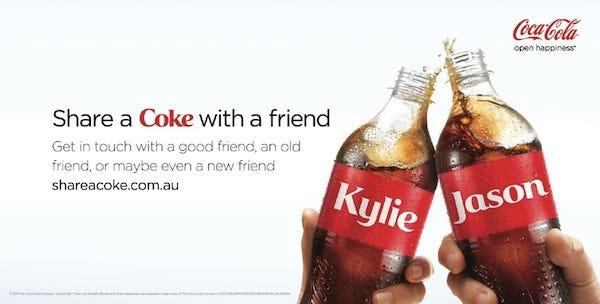
Coca-Cola has spent decades associating itself with happiness, family, celebration, and shared moments.
Emotion creates memory. Emotion creates cultural relevance. Emotion creates desire.
Without emotional resonance, even technically superior products can become invisible in crowded markets.
Why Logical Persuasion Still Closes the Sale
While emotion generates attraction, logic reduces hesitation.
Once consumers become emotionally interested, they immediately begin seeking reassurance.
They ask:
- Is this worth the price?
- Will this last?
- Can I trust this company?
- Is this financially responsible?
- What do reviews say?
- What happens if something goes wrong?
This is where logical persuasion becomes essential.
Brands operating in finance, insurance, automotive, and enterprise technology understand that trust cannot rely on emotion alone.
Companies like:
- Toyota
- Santam
- Standard Bank
consistently reinforce their emotional messaging with practical credibility:
- reliability
- security
- performance
- guarantees
- service quality
- long-term value
Logic transforms attraction into commitment.
Without logical reinforcement, emotional campaigns may generate visibility but fail to sustain conversion or loyalty.
The Dual-Layer Strategy Used by Top Brands
The most sophisticated brands rarely choose between emotional and logical marketing.
Instead, they sequence them strategically.
The process often looks like this:
Step 1: Create Emotional Attraction
This stage focuses on:
- storytelling
- aesthetics
- aspiration
- identity
- visual impact
The objective is simple: make the consumer feel something.
This is where cinematic advertising, influencer campaigns, music, luxury visuals, and cultural narratives become powerful.
Step 2: Introduce Logical Validation
Once attention is captured, the brand introduces:
- specifications
- testimonials
- reviews
- financing options
- guarantees
- performance metrics
- case studies
The goal shifts from inspiration to reassurance.
Consumers begin convincing themselves the emotional decision is also an intelligent one.
Step 3: Reduce Friction
Top brands aggressively remove barriers to purchase.
They simplify:
- payment systems
- onboarding
- returns
- customer support
- financing
- user experience
Convenience itself becomes a form of logical persuasion.
Step 4: Reinforce the Decision After Purchase
Elite brands understand buyer psychology does not end at checkout.
Post-purchase communication often includes:
- welcome emails
- premium packaging
- loyalty ecosystems
- customer success content
- social community integration
This reduces buyer’s remorse and strengthens emotional attachment.
Emotional and Logical Buying Across Industries
Different industries prioritize different psychological triggers, but the strongest brands still integrate both dimensions.
Full Funnel Marketing: Emotion at the Top, Logic at the Bottom
Most advanced marketing systems intentionally adjust persuasion styles throughout the customer journey.
Top of Funnel (TOFU)
At the awareness stage, emotion dominates.
The objective is to:
capture attention,
create intrigue,
and remain memorable.
This is where short-form video, storytelling, influencer marketing, and visually immersive campaigns become powerful.
Middle of Funnel (MOFU)
At this stage, consumers begin evaluating credibility.
Brands introduce:
case studies,
educational content,
social proof,
testimonials,
and product comparisons.
Emotion remains present, but logic becomes increasingly important.
Bottom of Funnel (BOFU)
At the decision stage, logical reassurance becomes dominant.
Consumers want clarity around:
pricing,
guarantees,
ROI,
onboarding,
support,
financing,
and risk reduction.
The brand’s role shifts from inspiration to certainty.
The Brands That Win Understand Human Nature
The greatest marketing advantage in modern business is not simply creativity or data.
It is psychological fluency.
The ability to understand:
what people fear,
what they aspire toward,
what validates them socially,
and what reassures them intellectually.
Top brands know that consumers do not buy products in isolation.
They buy stories.
They buy identity.
They buy confidence.
They buy emotional outcomes supported by rational explanations.
That is why the most effective campaigns are never purely emotional or purely logical.
They are strategically human.
And in increasingly competitive markets, that balance is often the difference between a brand that is noticed briefly and a brand that becomes unforgettable.