

Digital advertising has evolved from a “boost post and hope” exercise into a highly sophisticated growth engine. Brands that scale effectively through paid media do not simply spend more money — they build systems. Systems for attention, systems for conversion, systems for data, and systems for retention.
Two of the most powerful ecosystems for this are Meta advertising platforms (Facebook, Instagram, Messenger, Audience Network) and Google Ads (Search, YouTube, Display, Shopping, and Performance Max).
When strategically combined, these platforms allow businesses to dominate both demand creation and demand capture.
Facebook Ads create desire.
Google Ads capture intent.
Brands that understand this distinction scale faster, more efficiently, and more sustainably.
Understanding the Difference Between Facebook Ads and Google Ads
Before scaling, a brand must understand how each platform influences customer psychology.
Facebook Ads: Interruption-Based Marketing
Facebook and Instagram users are not actively searching for your product. They are browsing content, watching videos, and interacting socially.
This means Facebook Ads rely heavily on:
Creative quality
Emotional resonance
Visual storytelling
Audience targeting
Brand positioning
Facebook is exceptional for:
Brand awareness
Product discovery
Lifestyle positioning
Retargeting
Community building
Scaling consumer products
A strong Facebook campaign makes people want something they were not originally looking for.
Google Ads: Intent-Based Marketing
Google operates differently.
Users arrive with intent:
“Best insurance company”
“Affordable gym wear”
“Digital marketing agency near me”
“Buy protein powder online”
This makes Google Ads highly effective for:
High-conversion traffic
Lead generation
E-commerce purchases
Service businesses
Search visibility
Capturing ready-to-buy customers
Facebook creates curiosity.
Google monetizes demand.
The most scalable brands use both simultaneously.
The Foundation Before You Scale
One of the biggest advertising mistakes brands make is attempting to scale before establishing operational readiness.
Scaling amplifies weaknesses.
If your landing page converts poorly, increasing ad spend only accelerates wasted budget.
Before scaling, ensure the following:
- Clear Brand Positioning
Your audience must immediately understand:
Who you are
What you sell
Why you are different
Why they should trust you
Weak positioning creates weak ad performance.
Strong brands communicate:
Identity
Value
Transformation
Credibility
- A Functional Sales Funnel
Your ads are only the entry point.
The funnel must include:
- Attention
- Interest
- Consideration
- Conversion
- Retention
A scalable funnel typically includes:
High-performing creatives
Optimized landing pages
Strong offers
Retargeting sequences
Email/SMS automation
Post-purchase engagement
Without funnel infrastructure, scaling becomes financially unstable.
- Tracking and Analytics
Scaling without data is gambling.
Install and configure:
Meta Pixel
Google Tag Manager
Google Analytics 4
Conversion APIs
Event tracking
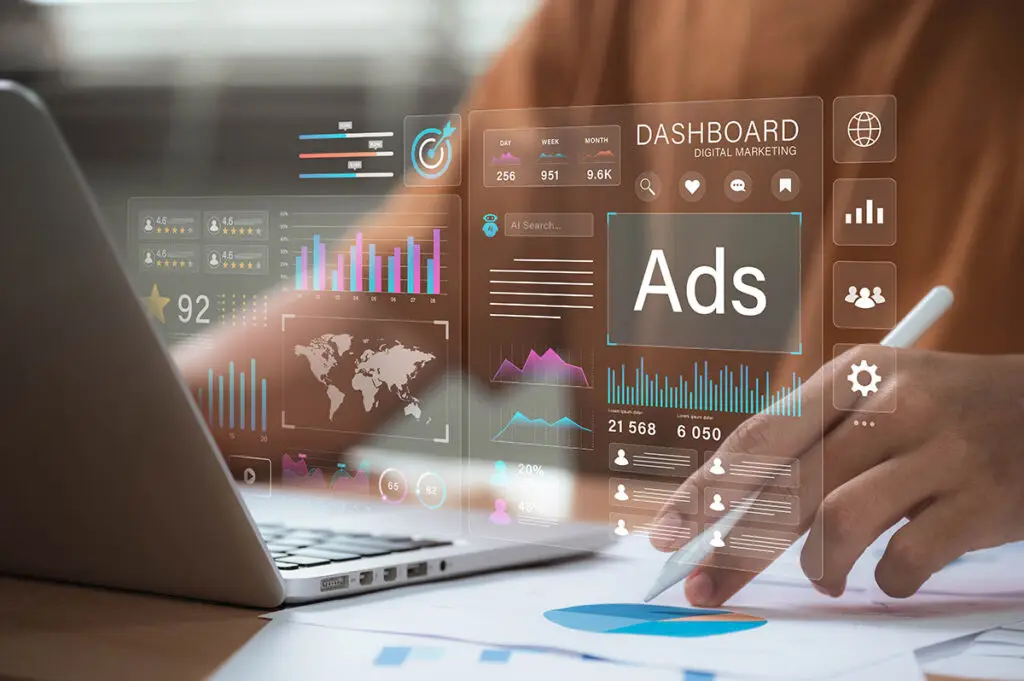
Track metrics such as:
Cost per click (CPC)
Cost per acquisition (CPA)
Return on ad spend (ROAS)
Customer lifetime value (LTV)
Conversion rate
Frequency
Bounce rate
The brands that scale best are usually data-driven, not emotionally driven.
How Facebook Ads Scale Brands
Step 1: Build Audience Layers
Facebook’s power lies in audience segmentation.
Cold Audiences
People unfamiliar with your brand.
Target using:
Interests
Behaviors
Demographics
Lookalike audiences
Goal: Generate awareness and engagement.
Warm Audiences
People who:
Watched videos
Visited your website
Engaged with content
Added products to cart
Goal: Build trust and consideration.
Hot Audiences
People closest to purchasing.
Retarget:
Cart abandoners
Website visitors
Previous customers
Goal: Drive conversions efficiently.
Scaling becomes easier when each audience receives messaging aligned with their awareness stage.
Step 2: Invest Heavily in Creative
Modern Facebook advertising is creative-first.
The algorithm increasingly rewards:
High watch time
Engagement
Relevance
User interaction
Winning ad formats include:
UGC (User Generated Content)
Founder storytelling
Before-and-after transformations
Product demonstrations
Problem-solution videos
Short-form vertical video
Brands that scale rapidly usually produce large creative volumes.
A common mistake is over-focusing on targeting while under-investing in creative quality.
Creative is now the targeting.
Step 3: Use Emotional Advertising
Facebook is psychologically driven.
High-performing ads often trigger:
Aspiration
Fear of missing out
Identity alignment
Social proof
Convenience
Status
Belonging
Consumers rarely buy purely rationally.
Even logical purchases contain emotional drivers.
For example:
A luxury watch is not just timekeeping.
It signals success.
A fitness product is not just equipment.
It represents transformation.
Great Facebook advertising sells the emotional outcome, not just the product.
Step 4: Retarget Aggressively
Most users do not convert immediately.
Retargeting is where major profitability emerges.
Retarget:
Video viewers
Website visitors
Cart abandoners
Email subscribers
Previous purchasers
Effective retargeting messaging includes:
Testimonials
Reviews
Guarantees
Limited offers
Product education
Case studies
Retargeting lowers acquisition costs while improving conversion efficiency.
How Google Ads Scale Brands
Step 1: Dominate Search Intent
Google Search Ads place your brand directly in front of active buyers.
This is powerful because:
Intent already exists
Purchase motivation is higher
Conversion windows are shorter
Focus on:
High-intent keywords
Commercial search phrases
Problem-aware queries
Examples:
“Best accounting software”
“Affordable SUV South Africa”
“Digital agency Johannesburg”
These users are already in-market.
Step 2: Optimize Landing Pages
Google traffic is highly transactional.
This means landing pages must:
Load quickly
Match search intent
Have clear headlines
Include strong CTAs
Reduce friction
Critical elements:
Testimonials
Trust indicators
Pricing clarity
Mobile optimization
Fast load speeds
Small landing page improvements can dramatically improve ROAS.
Step 3: Use YouTube for Brand Expansion
YouTube is one of the most underutilized brand-scaling platforms.
YouTube Ads help brands:
Build authority
Increase recall
Educate audiences
Extend attention spans
Create narrative depth
Unlike short-form social content, YouTube enables deeper storytelling.
Brands with educational or transformational positioning scale exceptionally well here.
Step 4: Leverage Performance Max Campaigns
Google’s Performance Max campaigns automate placements across:
Search
YouTube
Gmail
Display
Discover
Maps
This uses machine learning to optimize:
Audiences
Placements
Conversions
However, automation only works well when:
Conversion tracking is accurate
Creative assets are strong
Product feeds are clean
Historical data exists
Automation amplifies good strategy — it does not replace it.
The Real Secret to Scaling: Creative + Data + Patience
Most brands fail because they expect immediate profitability at scale.
Scaling requires:
Testing
Iteration
Data accumulation
Creative refinement
Audience learning
Successful advertisers test:
Headlines
Hooks
Visuals
Offers
Formats
Audiences
Landing pages
Scaling is less about “finding one winning ad” and more about building a repeatable testing system.
Common Mistakes Brands Make
Scaling Too Fast
Increasing budget aggressively can destabilize performance.
Scale gradually:
10–20% increases
Controlled testing
Monitor CPA and ROAS
Ignoring Creative Fatigue
Audiences eventually stop responding to the same ad.
Refresh creatives consistently.
Large brands often launch:
New hooks weekly
New visuals monthly
New campaigns quarterly
Focusing Only on Sales
Performance marketing without branding becomes expensive over time.
Strong brands lower acquisition costs because consumers already recognize and trust them.
Brand equity improves:
CTR
Conversion rates
Retention
Word-of-mouth
Organic traffic
Paid media should build brand memory, not just short-term sales.
The Future of Facebook and Google Advertising
Advertising is becoming increasingly driven by:
AI optimization
First-party data
Automation
Creative differentiation
Personalization
Short-form video
Omnichannel attribution
As targeting precision declines due to privacy regulations, creative quality and brand strength become even more important.
The brands that will dominate in the coming years are not necessarily the brands with the largest budgets.
They are the brands with:
Strong positioning
Better storytelling
Faster testing cycles
Better customer understanding
Integrated data ecosystems
Final Thoughts
Facebook and Google Ads are not competing systems. They are complementary growth engines.
Facebook builds attention.
Google captures intent.
Together, they create scalable customer acquisition ecosystems.
The brands that scale successfully understand one critical principle:
Advertising alone does not build a business.
Advertising amplifies:
Brand clarity
Customer psychology
Operational efficiency
Strategic positioning
When those foundations are strong, paid media becomes one of the most powerful scaling mechanisms available in modern business.